Children already know how to play with a picture book: they point, they guess what happens next, they make the sounds. A good book game simply gives them more of that. Here is how we approach it, based on turning our dad's poems into Mouse and Cat, Hungry Sparrow and Echo.
Start from one scene, not the whole book
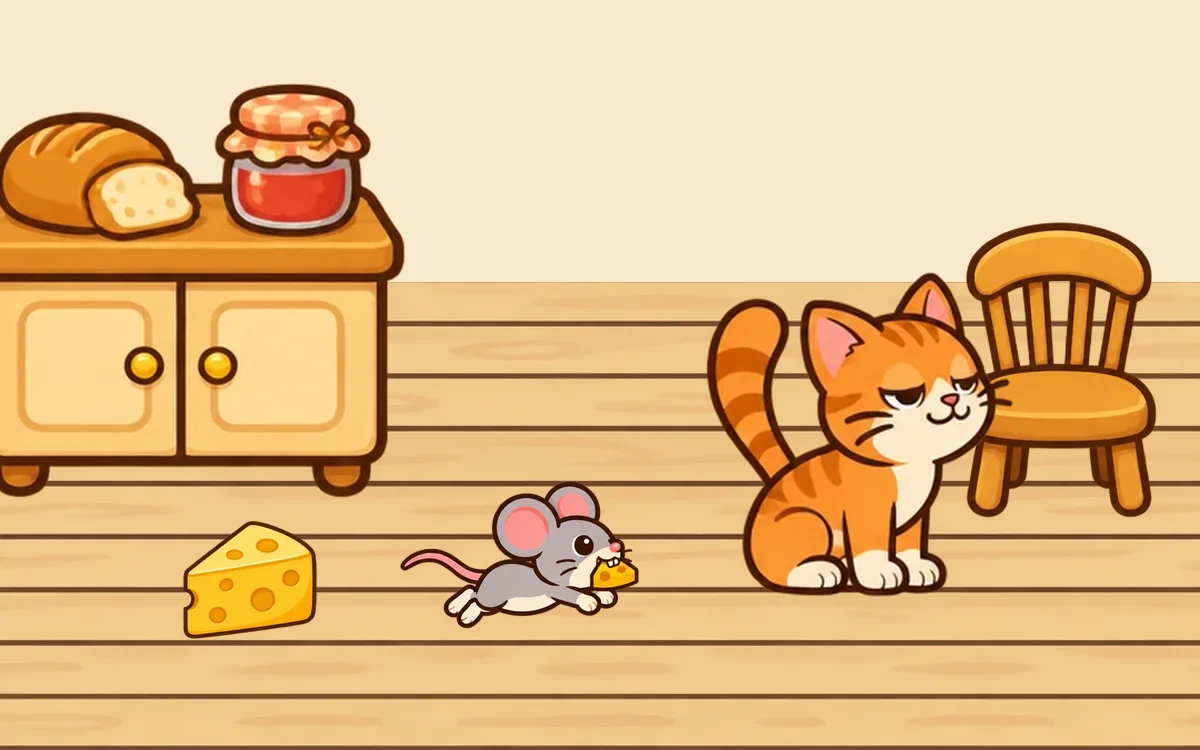
Pick the moment children ask for again and again. In a poem about a mouse and a sleepy cat, that moment is sneaking past. One scene with one clear action is enough for a first game, and it can be ready in weeks, not months.
Keep what children love about the book
- The words. Read the text aloud at the start and let it come back during play. Rhythm is half the charm.
- The pictures. Characters should look like the ones in the book, so a child recognises them at once.
- The ending. If the book ends kindly, the game should too. Losing should feel like "try again", never like punishment.
Make the play match the age
For three to five year olds: big targets, one action at a time, no reading needed, no timers that rush them. For six to eight: simple rules that build up, a little memory or timing, and small surprises. In every case, a watch-and-listen mode lets the youngest enjoy the story without controls.
Think about languages early
If your readers are bilingual, plan the voice recording and the text for both languages from the start. Our games read each poem in Russian and English, and the player picks the language on the first screen.
Browser first, stores later
A browser game can be shared with one link: on your website, in a newsletter, in a classroom. Once it works, the same code can become an iPhone, iPad and Android app. For children's apps, plan privacy from the start: no ads, no tracking and a parental gate in front of purchases and links.
What you need to bring
The book (or the manuscript), the illustrations or a sense of the style you want, and the age of your readers. We bring the game design, art, code, voice and the store paperwork. If you have a picture book that wants to be played, write to us.